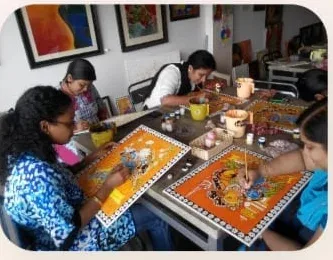
Learn how to make Tanjore painting with essential materials and traditional techniques, including relief work, gold foil, colours and stone setting.
How to Make Tanjore Painting: Techniques and Materials
Tanjore painting is a traditional Indian art form known for its rich colours, raised ornamental work, gold foil, and decorative stones. If you are wondering how to make Tanjore painting, understanding the right materials and techniques is an important starting point.
The making of a Tanjore painting involves several artistic elements, including preparing the painting surface, developing the design, creating raised relief work, applying gold foil, adding decorative stones, and completing the colour and fine details. Each material and technique contributes to the distinctive appearance of the finished artwork.
Materials Used to Make Tanjore Painting
The materials used in Tanjore painting are selected to support its characteristic relief, gold work, vibrant colours, and detailed decoration. Understanding the purpose of each material helps in achieving a well-finished artwork.
Painting Base
A strong and stable painting surface is essential for Tanjore artwork because it needs to support the raised relief work and decorative elements.
Traditionally, a wooden board is commonly used as the base. A properly prepared surface provides stability and helps the artwork maintain its structure. Depending on the style and working method, canvas mounted on a suitable board may also be used.
The quality and preparation of the base are important because uneven surfaces can affect the appearance of the relief work, gold foil, and other decorative details.
Drawing Materials
Basic drawing materials are used to develop the design before the decorative work begins. These may include pencils, tracing paper, rulers, and design templates.
The design is carefully planned so that the central subject, ornaments, jewellery, clothing, and surrounding decorative patterns are properly positioned. Tracing or transferring a prepared design can help maintain accurate proportions and symmetry.
Relief Work Materials
Relief work is one of the defining features of Tanjore painting. It gives selected portions of the artwork a raised appearance and creates depth.
Materials such as relief paste, chalk-based mixtures, and suitable adhesives may be used to build up raised areas. These materials are carefully applied to sections such as jewellery, crowns, ornaments, borders, and other decorative elements.
The consistency of the relief material is important. It should create clearly defined raised patterns while allowing the subsequent decorative work to be applied neatly.
Gold Foil Materials
Gold foil is an important decorative element in Tanjore painting. It gives the artwork its characteristic luminous and richly ornamented appearance.
Gold foil or gold leaf is applied over selected raised areas using an appropriate adhesive. The foil needs to sit smoothly over the prepared surface so that the ornamental patterns remain clearly visible.
The amount and placement of gold work depend on the design. It is commonly used extensively around jewellery, crowns, ornaments, borders, and other prominent decorative areas.
Colours and Brushes
Colours bring the main subject and decorative elements of a Tanjore painting to life. Rich and contrasting shades are often used to define the central figure, clothing, background, and ornamental details.
Different brushes are required for larger colour areas as well as fine details. A palette is useful for preparing and mixing colours before application.
Colour application is not limited to filling spaces. Shading, outlining, highlights, and fine colour transitions help create depth and definition within the artwork.
Stones and Embellishments
Decorative stones and embellishments add another layer of richness to Tanjore paintings. They are particularly associated with jewellery, crowns, ornaments, and other detailed sections.
Stones, pearls, beads, and other suitable decorative elements can be positioned within the raised designs. Their placement should complement the composition rather than overpower the painted details.
These embellishments work together with the gold foil and relief work to create the highly decorative character associated with Tanjore painting.
Techniques Used in Tanjore Painting
The distinctive appearance of Tanjore painting comes from the combination of several traditional techniques. These techniques work together to create depth, shine, colour, and intricate ornamentation.
Design Sketching and Outlining
The design provides the foundation for the entire painting. The main subject is carefully sketched on the prepared surface, followed by the surrounding decorative elements.
Important areas such as the face, jewellery, clothing, crown, ornaments, and borders are outlined clearly. Accurate sketching helps maintain proportion and makes the later relief and decorative work easier to execute.
Relief and Embossing
Relief work creates the raised effect that distinguishes Tanjore painting from a flat painting surface.
The relief material is applied to selected parts of the design, particularly ornamental areas. Once shaped appropriately, it creates a raised surface that adds depth and dimension.
This technique is especially important for jewellery, crowns, decorative borders, and other prominent elements. The height and definition of the relief influence how the gold foil and embellishments appear later.
Gold Foil Application
Gold foil application is one of the most recognisable techniques in Tanjore painting. The foil is placed over prepared areas of relief work to create a bright and decorative golden surface.
The foil must be handled carefully so that it follows the raised design without losing the clarity of the underlying pattern. Smooth application helps produce clean golden sections and enhances the ornamental quality of the painting.
The combination of raised relief and gold foil creates the characteristic dimensional appearance of Tanjore artwork.
Stone Setting
Stone setting involves placing decorative stones and embellishments within selected ornamental areas.
Jewellery, crowns, necklaces, earrings, borders, and other decorative sections may feature stones or similar embellishments. Their placement is carefully coordinated with the relief and gold work.
Good stone setting maintains balance within the composition while enhancing the richness of the artwork.
Colour Application and Shading
Colour application gives definition and character to the main subject and its surrounding elements. Vibrant colours can be used to create contrast between the central figure, clothing, background, and ornaments.
Shading helps add depth and visual separation. Carefully applied darker and lighter tones can make forms appear more dimensional and help highlight important parts of the composition.
Colour choices also need to work harmoniously with the gold foil and decorative elements.
Fine Detailing and Finishing
Fine detailing brings the painting together after the major decorative and colour elements have been developed.
Details may include facial features, eyes, jewellery patterns, clothing designs, ornamental lines, borders, and other small elements. Fine outlines and carefully placed details help define the composition.
The finishing stage focuses on ensuring that the painting looks clean, balanced, and complete, with the relief, gold work, colours, and embellishments working together as a unified artwork.
- How to Make Tanjore Painting: Techniques and Materials — Tanjore painting is a traditional Indian art form known for its rich colours, raised ornamental work, gold foil, and decorative stones.
- Materials Used to Make Tanjore Painting — The materials used in Tanjore painting are selected to support its characteristic relief, gold work, vibrant colours, and detailed decoration.
- Techniques Used in Tanjore Painting — The distinctive appearance of Tanjore painting comes from the combination of several traditional techniques.
- The Tanjore Painting Making Process — Understanding how to make Tanjore painting involves looking at how its different materials and techniques come together.
- How Materials and Techniques Work Together — The materials and techniques used in Tanjore painting are closely connected.
The Tanjore Painting Making Process
Understanding how to make Tanjore painting involves looking at how its different materials and techniques come together. The process begins with preparing a suitable painting base and developing the selected design.
Once the design is established, the required relief work is created on important ornamental areas. This raised surface provides the foundation for the characteristic dimensional appearance of the artwork.
Gold foil is then incorporated into the appropriate raised sections, while decorative stones and embellishments add richness to jewellery and ornamental details. Colours are applied to the main subject and surrounding areas, followed by shading, outlining, and fine detailing.
The final result comes from the combination of these techniques rather than from any single material. Surface preparation, design, relief work, gold application, decoration, colouring, and finishing all contribute to the completed Tanjore painting.
How Materials and Techniques Work Together
The materials and techniques used in Tanjore painting are closely connected. Each material serves a particular purpose and supports another stage of the artistic process.
The painting base provides a stable foundation for the artwork. Drawing materials help establish the design, while relief materials create raised sections. These raised areas provide the surface needed for effective gold foil application.
Gold foil adds the characteristic golden appearance, while stones and embellishments enhance jewellery and ornamental details. Colours and brushes bring the main composition to life through colour, shading, outlining, and fine detailing.
When these materials and techniques are used together, they create the distinctive combination of relief, gold work, vibrant colours, and decorative elements associated with Tanjore painting.
Frequently Asked Questions About Making Tanjore Painting
What materials are needed to make Tanjore painting?
The main materials include a suitable painting base, drawing tools, relief materials, adhesive, gold foil, colours, brushes, and decorative stones or embellishments. The exact materials can vary depending on the design and working method.
What techniques are used in Tanjore painting?
Important techniques include design sketching, outlining, relief and embossing, gold foil application, stone setting, colour application, shading, and fine detailing. Together, these techniques create the dimensional and decorative appearance of the artwork.
What is used to create the raised effect in Tanjore painting?
The raised effect is created using suitable relief materials applied to selected areas of the design. These raised sections are particularly important for jewellery, crowns, ornaments, and decorative patterns.
How is gold foil applied in Tanjore painting?
Gold foil is applied over selected prepared areas, particularly raised ornamental sections. An appropriate adhesive helps secure the foil to the surface, while careful application helps maintain the clarity and smoothness of the gold work.
Conclusion
Learning how to make Tanjore painting involves understanding both the materials and the traditional techniques that give the artwork its distinctive appearance. The painting base provides the foundation, while relief work creates dimension, gold foil adds richness, and stones and embellishments enhance the ornamental details.
Colour application, shading, outlining, and fine detailing complete the visual composition. When these materials and techniques are carefully combined, they create the richly detailed and dimensional character that makes Tanjore painting unique.