Compare Kerala Mural Painting vs Tanjore Painting to understand their colours, materials, techniques, gold foil work and key differences.
Kerala Mural Painting vs Tanjore Painting: 10 Key Differences
Kerala Mural Painting and Tanjore Painting are two beautiful traditional South Indian art forms. Both feature religious themes, detailed artwork and rich colours, but their techniques, materials and overall appearance are different.
If you want to understand these art forms or choose one to learn, this guide compares their key features in a simple, easy-to-read format.
What Is Kerala Mural Painting?
Kerala Mural Painting is a traditional art form from Kerala, known for expressive figures, detailed outlines and rich colours. Traditionally, these paintings decorated temple walls and palace interiors, depicting Hindu deities and stories from mythology.
| Feature | Details |
|---|---|
| Origin | Kerala, India |
| Traditional subjects | Hindu gods, goddesses and mythological stories |
| Art style | Expressive figures, graceful poses and detailed outlines |
| Colours | Traditionally uses pigments derived from natural materials |
| Important features | Expressive eyes, fine linework and decorative details |
| Traditional surface | Prepared walls |
| Modern surfaces | Canvas, paper and other suitable surfaces |
| Main attraction | Storytelling through expressive figures and traditional colours |
What Is Tanjore Painting?
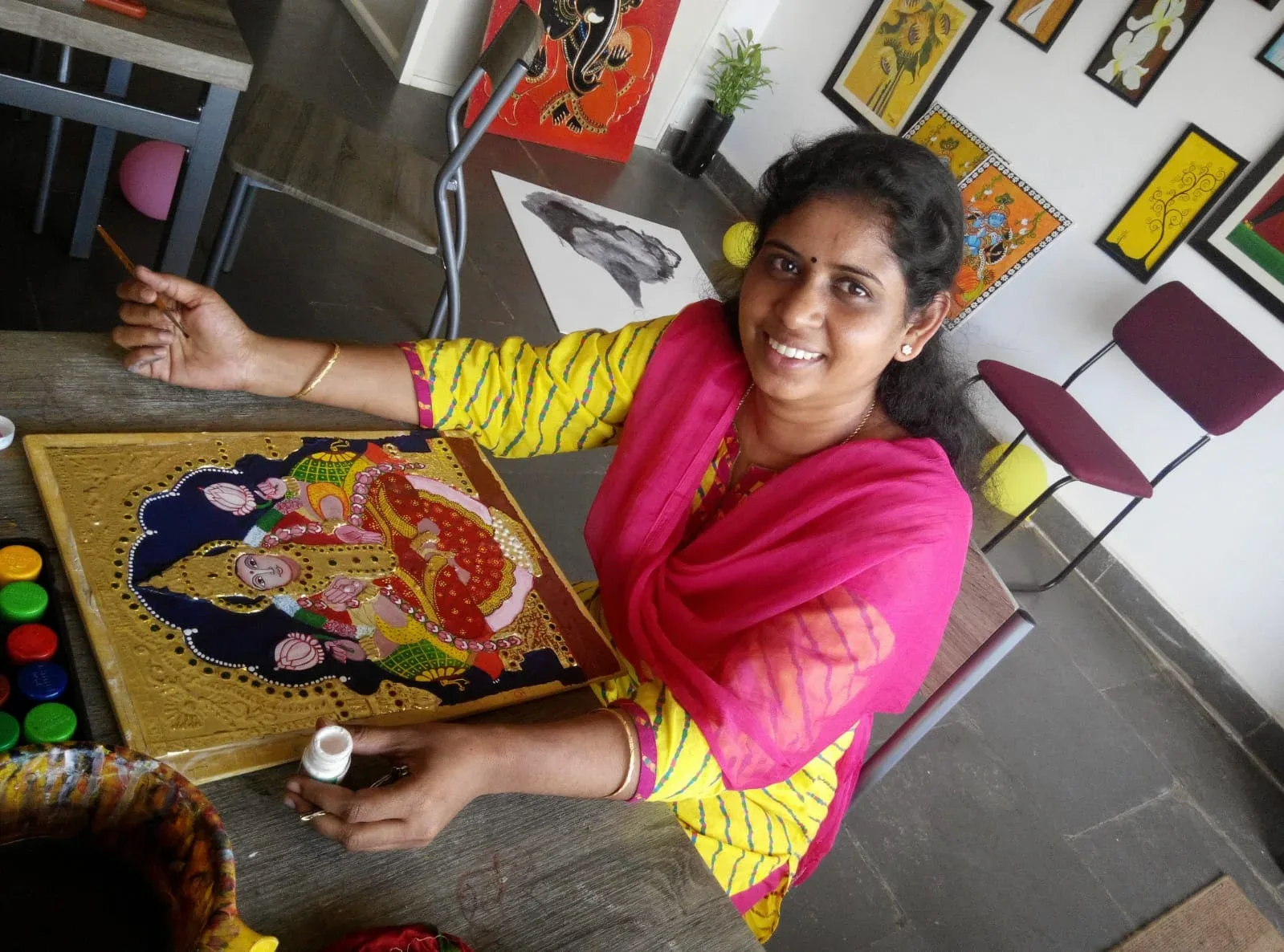
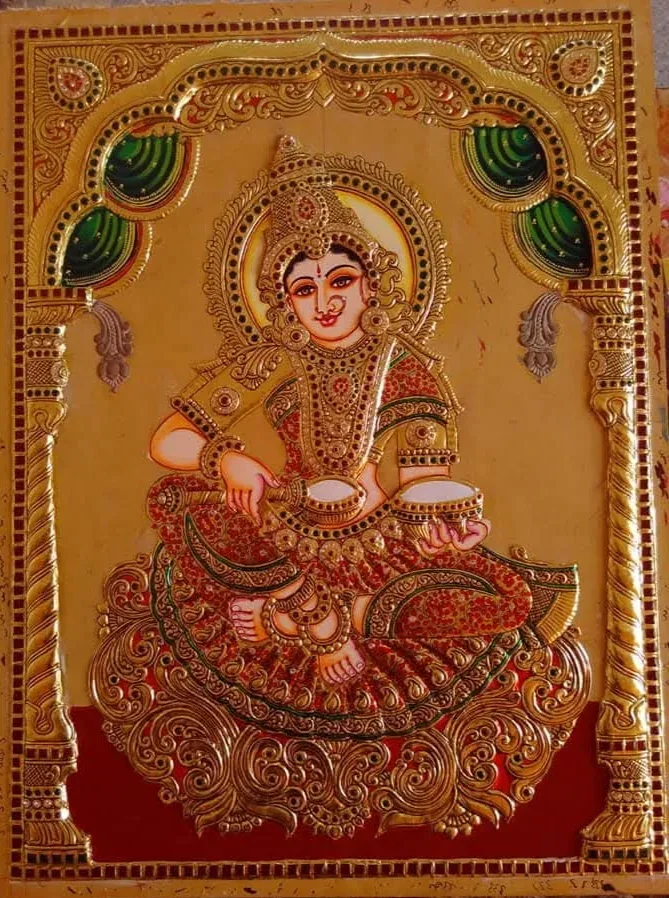
Tanjore Painting, also known as Thanjavur Painting, originated in Thanjavur, Tamil Nadu. It is recognised for its devotional subjects, rich colours, gold foil and raised decorative work.
| Feature | Details |
|---|---|
| Origin | Thanjavur, Tamil Nadu, India |
| Traditional subjects | Hindu deities and devotional scenes |
| Art style | Prominent central figures with decorative arrangements |
| Colours | Rich, vibrant colours complemented by gold |
| Important features | Gold foil, raised details and elaborate ornamentation |
| Traditional surface | Prepared painting panels |
| Decorative elements | Gold foil and, in some works, stones or glass |
| Main attraction | Rich golden finish and detailed ornamentation |
Kerala Mural Painting vs Tanjore Painting: 10 Key Differences
The table below highlights the main differences between these two traditional painting styles.
| No. | Comparison | Kerala Mural Painting | Tanjore Painting |
|---|---|---|---|
| 1 | Origin | Kerala | Thanjavur, Tamil Nadu |
| 2 | Historical setting | Temple walls and palace murals | Devotional paintings created on prepared panels |
| 3 | Subjects | Deities, mythological stories and narrative scenes | Deities and devotional subjects |
| 4 | Figures | Expressive faces, flowing lines and graceful poses | Prominent figures with elaborate decoration |
| 5 | Colours | Traditional earthy and natural pigment palette | Rich colours complemented by gold |
| 6 | Gold foil | Not a defining feature | A signature feature |
| 7 | Surface texture | Traditionally painted on prepared walls | Often features raised decorative work |
| 8 | Ornamentation | Detailed outlines, jewellery and traditional motifs | Gold-covered ornaments, crowns and decorative arches |
| 9 | Techniques | Drawing, outlining, colour application and detailing | Surface preparation, raised work, gold application and painting |
| 10 | Overall appearance | Colourful, expressive and detailed | Rich, ornamental and luminous |
1. Difference in Origin and History
| Kerala Mural Painting | Tanjore Painting |
|---|---|
| Developed within Kerala’s temple and palace mural traditions. | Developed within the artistic traditions of Thanjavur in Tamil Nadu. |
| Historical examples depict mythological stories and religious themes on architectural surfaces. | The style grew through temple traditions and royal patronage, particularly under Nayak and Maratha rulers. |
| Traditionally associated with large painted wall compositions. | Particularly associated with decorative devotional panels. |
2. Difference in Painting Style
| Kerala Mural Painting | Tanjore Painting |
|---|---|
| Uses expressive facial features, flowing lines and detailed outlines. | Often features a prominent central deity surrounded by decorative elements. |
| Figures and backgrounds may work together to tell a mythological story. | Composition often draws attention to the deity and ornamental surroundings. |
| Fine linework and the arrangement of figures are important. | Decorative symmetry, jewellery and elaborate framing are common visual features. |
3. Difference in Colours
| Kerala Mural Painting | Tanjore Painting |
|---|---|
| Traditionally uses pigments prepared from natural materials. | Uses rich colours that complement gold foil and decorative work. |
| Red, yellow, green, black and white are characteristic colours in traditional palettes. | Red, green, blue and other vibrant colours are commonly seen. |
| Colour relationships help define figures, outlines and backgrounds. | Colours enhance the central figure and ornamental details. |
| The overall effect is expressive and colourful. | The overall effect is rich and decorative. |
4. Difference in Gold Foil Usage
| Kerala Mural Painting | Tanjore Painting |
|---|---|
| Gold foil is not essential to the traditional style. | Gold foil is one of the most recognisable features. |
| The visual appeal mainly comes from colours, figures and detailed outlines. | Gold foil highlights jewellery, crowns, arches and selected decorative areas. |
| The composition relies on painted details and colour balance. | The golden finish creates a distinctive decorative appearance. |
- Kerala Mural Painting vs Tanjore Painting: 10 Key Differences — Kerala Mural Painting and Tanjore Painting are two beautiful traditional South Indian art forms.
- What Is Kerala Mural Painting? — Kerala Mural Painting is a traditional art form from Kerala, known for expressive figures, detailed outlines and rich colours.
- What Is Tanjore Painting? — Tanjore Painting, also known as Thanjavur Painting, originated in Thanjavur, Tamil Nadu.
- Kerala Mural Painting vs Tanjore Painting: 10 Key Differences — The table below highlights the main differences between these two traditional painting styles.
- 9. Which Painting Style Is Suitable for Beginners? — Both art forms can be learned by beginners.
5. Difference in Surface Texture
| Kerala Mural Painting | Tanjore Painting |
|---|---|
| Traditionally created on prepared wall surfaces. | Traditionally created on prepared panels. |
| Focuses on painted details, outlines and colour application. | Often includes raised decorative areas. |
| The finished appearance depends on the painting technique and surface. | Raised paste and gold foil give selected areas added depth and prominence. |
6. Difference in Materials and Techniques
| Stage | Kerala Mural Painting | Tanjore Painting |
|---|---|---|
| Surface preparation | Preparing a suitable wall or modern painting surface | Preparing a panel and its painting surface |
| Drawing | Sketching figures, motifs and compositions | Sketching the central figure and decorative layout |
| Colouring | Applying colours and refining outlines | Painting figures and decorative sections |
| Special technique | Detailed linework and traditional colour application | Raised relief work and gold foil application |
| Finishing | Adding fine outlines and small details | Finishing gold decoration, ornaments and other details |
7. Difference in Subjects and Themes
| Kerala Mural Painting | Tanjore Painting |
|---|---|
| Hindu gods and goddesses | Hindu gods and goddesses |
| Episodes from mythology and traditional literature | Devotional images of deities |
| Scenes with multiple figures and narrative elements | Often features one prominent central deity |
| Emphasis on expression and storytelling | Emphasis on devotional presentation and ornamentation |
8. Difference in Overall Appearance
| Kerala Mural Painting | Tanjore Painting |
|---|---|
| Colourful and expressive | Rich and ornamental |
| Detailed outlines and flowing forms | Prominent figures and elaborate decorations |
| Traditional colours and intricate painted details | Gold foil and raised decorative elements |
| Visual focus on figures, expressions and composition | Visual focus on the deity, gold and embellishments |
9. Which Painting Style Is Suitable for Beginners?
Both art forms can be learned by beginners. The better choice depends on your interests, patience and preferred painting techniques.
| Learning factor | Kerala Mural Painting | Tanjore Painting |
|---|---|---|
| Starting point | Basic shapes, figures and outlines | Basic sketching and simple devotional designs |
| Skills to practise | Linework, colour application and traditional motifs | Surface preparation, decorative relief and gold application |
| Main learning focus | Expressive figures and detailed painting | Ornamentation and layered decorative techniques |
| May appeal to | Learners who enjoy drawing and traditional colours | Learners who enjoy gold details and decorative artwork |
Which should you choose?
Choose Kerala Mural Painting if you enjoy expressive figures, detailed outlines and traditional colour techniques. Consider Tanjore Painting if you are interested in gold decoration, raised textures and elaborate ornaments.
Neither style is automatically easier for every beginner. Both require regular practice and suitable guidance.
10. Can You Learn Kerala Mural Painting Online?
Yes. Online classes can help learners understand traditional painting techniques through instructor demonstrations, guided practice and feedback.
| Learning aspect | How online classes can help |
|---|---|
| Basic drawing | Practise shapes, outlines and traditional motifs |
| Colour techniques | Understand colour selection and application |
| Guided demonstrations | Observe painting steps and follow along |
| Practice | Work on assignments between sessions |
| Feedback | Improve techniques with instructor guidance, where provided |
At Varnaalaya Arts, learners interested in traditional Indian art can explore available online learning opportunities.
Visit Varnaalaya Arts to learn more about the academy and its classes.
Frequently Asked Questions
| Question | Answer |
|---|---|
| What is the main difference between Kerala Mural Painting and Tanjore Painting? | Kerala Mural Painting is known for expressive figures and detailed outlines, while Tanjore Painting is recognised for gold foil, raised work and decorative richness. |
| Which painting uses gold foil? | Gold foil is a signature feature of traditional Tanjore Painting. |
| Are both painting styles from South India? | Yes. Kerala Mural Painting originates from Kerala, while Tanjore Painting originates from Thanjavur, Tamil Nadu. |
| Which painting is easier for beginners? | It depends on individual interests and experience. Kerala Mural Painting focuses on linework and colour, while Tanjore Painting includes additional decorative techniques. |
| Can Kerala Mural Painting be done on canvas? | Yes. Contemporary artists adapt the style to canvas and paper as well as traditional wall surfaces. |
| What materials are used in Tanjore Painting? | Traditional materials include prepared panels, cloth, paste for raised details, pigments and gold foil. Some works also feature stones or glass. |
| What subjects are common in Kerala Mural Painting? | Traditional subjects include Hindu deities, mythological stories and narrative scenes. |
| Can I learn Kerala Mural Painting online? | Yes. Online instruction can teach drawing, colour application and traditional motifs through demonstrations and guided practice. |
Conclusion
Kerala Mural Painting and Tanjore Painting are two distinctive South Indian art traditions. Although both feature devotional themes and detailed artwork, they differ in their history, painting techniques, materials and visual appearance.
| If you prefer… | Consider learning… |
|---|---|
| Expressive figures and flowing outlines | Kerala Mural Painting |
| Traditional colours and narrative compositions | Kerala Mural Painting |
| Gold foil and raised decoration | Tanjore Painting |
| Elaborate jewellery and ornamental details | Tanjore Painting |
Understanding these differences helps you appreciate the unique qualities of both art forms and choose a style that suits your interests.
If you would like to learn more about traditional Indian art, visit Varnaalaya Arts to explore the available classes and begin your art journey.